



This essay is part of the Between Chapters project. What chapters are you between? How did you get from one chapter to another? Share your story here.

Motherhood was my drug of choice. For more than two decades, raising my children was the most intoxicating high I have ever known. We built a beautiful, unconventional life together. There were ferry crossings and boat rides, winters spent carving down snowy mountainsides, and summers swollen with salt air and sunburns. The house brimmed with life—dogs, parakeets, turtles, chickens. We traveled to Guatemala so often it became stitched into the fabric of our family story.
Life was noisy and full and gloriously demanding. I lived for it. I mothered with my whole being. I shaped my days around my children and gave them the very best of myself. It wasn't simply what I did. It was who I was.
Then one day, the chapter changed. My son left home first to go to college. Three years later, it was my daughter's turn. I remember standing in her dorm room doorway after the last box had been unpacked. I hugged her goodbye. Then I walked down the hallway trying not to fall apart.
Everyone talks about preparing children to leave home. No one talks much about what happens to the person left standing in the parking lot afterward. The truth is, I wasn't ready. I didn't want to retire from full-time mothering. I had been given notice anyway.
My sister, sensing the depth of my grief, whisked me to Disneyland with my two beloved nephews. We rode roller coasters and ate churros and laughed beneath artificial castles and fireworks. Then the rides stopped. The lights dimmed. And the ache returned.
From Los Angeles, I flew to Bozeman, where my son was living. A friend mentioned that a restaurant needed a dishwasher for two shifts. I was thrilled.
After decades of washing dishes for free, I was finally going to get paid for one of the core competencies of motherhood. I borrowed a bicycle, pedaled to work, tied on a rubber apron, and stepped into the steamy chaos of the kitchen. Within minutes I was drenched. I loved it.

Then someone whispered that Glenn Close was dining in the restaurant. Suddenly sixteen-year-old me reappeared. The girl still traumatized by Fatal Attraction. There she was—cropped silver hair, unmistakable profile. I stood ankle-deep in soapy water preparing to wash Glenn goddamn Close's dishes.
After years of caring for everyone else, I was beginning again from the bottom.
That dish pit became an unlikely threshold. Because what I didn't understand at the time was that motherhood wasn't the only thing ending. A version of myself was ending too.
The years that followed were harder than I like to admit. The dream I had carried for more than a decade—to move to Guatemala once my children were grown—suddenly became impossible. The future I had imagined dissolved. Without ferry schedules to keep, school calendars to manage, or children returning home each afternoon, I found myself face-to-face with a stranger. Who was I without motherhood at the center? The question terrified me.
Depression arrived quietly and then all at once. Some mornings I could barely lift my head. I ignored phone calls. Skipped invitations. Numbed myself with tequila and ice cream and endless distraction. I missed the sound of my children's footsteps. I missed hearing their voices drift through the house. I missed being needed.
For twenty-two years, I knew exactly what my purpose was. Now I didn't. Looking back, I realize I was grieving more than my children leaving home. I was grieving an identity. And yet, beneath all that grief, something else was waiting. Art. It waited patiently while I mourned. Eventually, it became impossible to ignore. I started small. A hot bath. A bike ride. A plunge into the cold waters of Puget Sound.

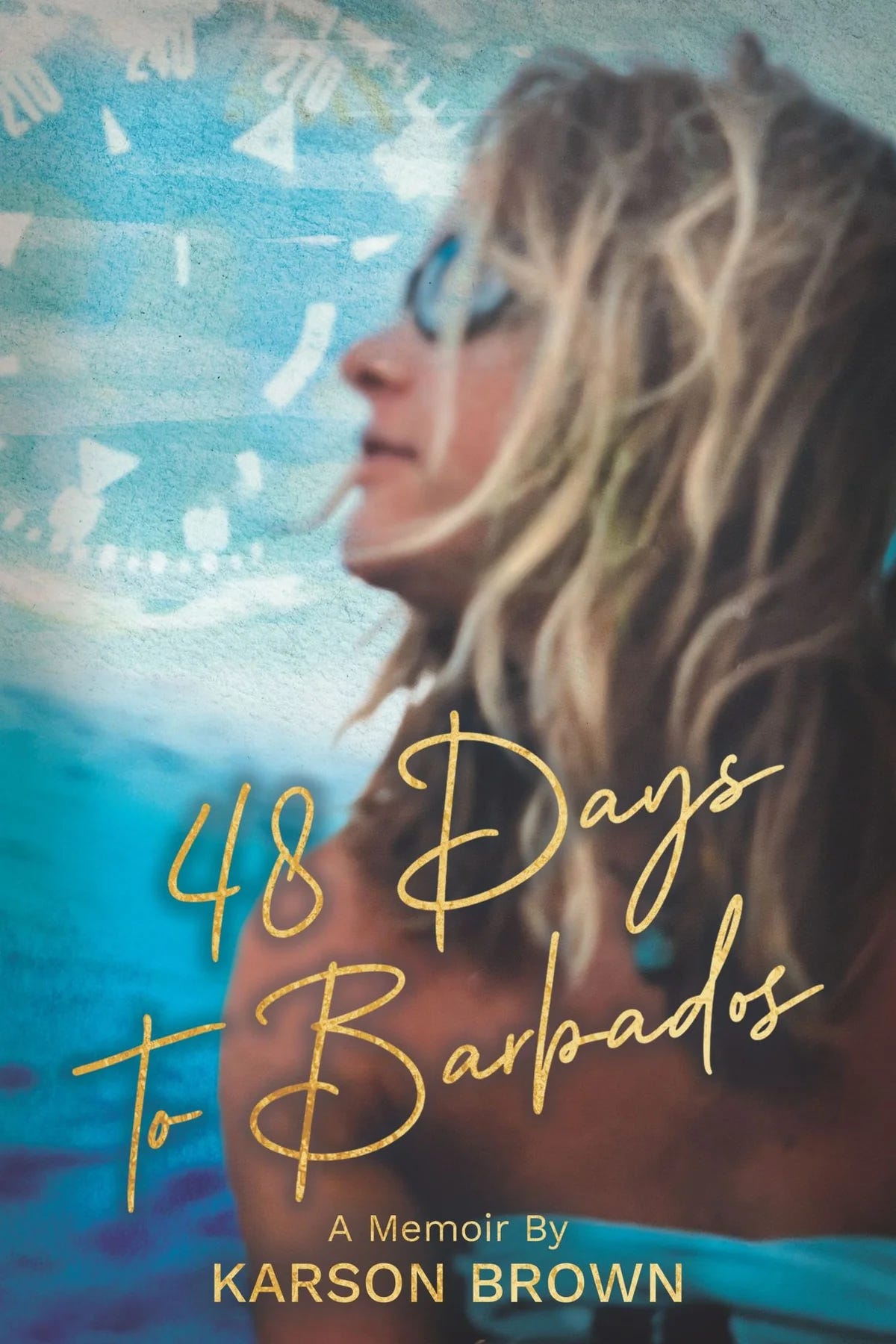
Then one gray morning I opened a manuscript I had been ignoring. It was a story about sailing across the Atlantic Ocean aboard a thirty-four-foot sailboat when I was twenty-eight years old. The crossing had begun in Portugal. Forty-eight days later, I arrived in Barbados. For years the manuscript sat unfinished in a folder on my computer. I opened my laptop and began writing. I wrote before dawn and after walks along the water. I wrote on days when the words came easily and on days when I doubted every sentence. Slowly, the story I had carried for nearly half my life took shape. Page by page, chapter by chapter, I finished the book.
This fall, at fifty-five years old, my memoir about that Atlantic crossing will be published. What astonishes me isn't that I wrote a book. It's that the chapter I feared most—the one that began when my children left home—created the space for me to finish it. The very loss I thought might undo me became the thing that returned me to myself.
That is the chapter I am living now. The reclamation chapter. The chapter where my children are thriving exactly as they should be—building lives of their own. The chapter where I finally have the time and courage to pursue the creative work that waited so patiently for me. Ironically, the chapter I feared most became the chapter that gave me back my art. And that may be the greatest surprise of my life.
I miss full-time motherhood. I miss family dinners and road trips and bedtime stories. I miss the ordinary intimacy of daily life together. I miss being the first person they called. Those years were beautiful precisely because they were temporary. The chapter I am most excited about is the one unfolding before me: a first book, new stories, and a future I cannot fully see. At twenty-eight, sailing west across the Atlantic, I couldn't see Barbados from Portugal. I trusted the horizon anyway.
That may be the greatest lesson I have learned about difficult chapters. You do not need to know what comes next. You do not need certainty. You simply need enough faith to keep moving forward. Sometimes the chapter that feels like loss is actually transformation. Sometimes what looks like an ending is an invitation. And sometimes the chapter you would have fought hardest to avoid becomes the one that finally brings you home to yourself.
Karson Brown is the author of the upcoming memoir 48 Days to Barbados (10/20/26). Follow her on Substack, Karson brown, and Instagram @ekarsonbrown.
 | A guest post by
|
This is a beautiful essay, Karson. While our stories are different, we both have discovered our next chapters on art (writing)! I look forward to reading your book.
Diane
The dish pit scene is the one that got me. After decades of washing dishes for free, getting paid for it — there's something true in that image that I'm still turning over. The way you named it as a threshold rather than a low point reframes the whole thing.
I've been standing in my own version of that parking lot, and reading this helped.